
Introduction: Why Celtic Salt Benefits Are Gaining Scientific Attention
In recent years, natural and unrefined salts have gained renewed interest among health professionals and wellness enthusiasts. Among them, Celtic sea salt stands out due to its mineral richness, traditional harvesting methods, and potential health benefits.
When people search for Celtic salt benefits, they are often looking beyond basic seasoning. They want to understand how this ancient salt supports hydration, electrolyte balance, digestion, and overall wellness—backed by science, not trends.
This in-depth guide explores the benefits of Celtic salt, how it compares to regular salt, and how to use it safely as part of a balanced lifestyle.
Target Audience: Health-conscious consumers, wellness seekers, nutrition-focused individuals, and natural living enthusiasts.
What Is Celtic Sea Salt?
Celtic sea salt, also known as sel gris (gray salt), is a minimally processed salt harvested from coastal regions of France using traditional clay-lined salt ponds.
Unlike refined table salt, Celtic salt:
- Is unrefined and unbleached
- Retains trace minerals
- Has a naturally moist texture
- Contains no chemical additives
These characteristics are central to many claimed Celtic sea salt benefits.
Nutritional Profile: Why Celtic Salt Is Different
While sodium chloride remains the primary component, Celtic salt also contains trace minerals absorbed from seawater and clay beds.
Common Minerals Found in Celtic Sea Salt
- Magnesium
- Calcium
- Potassium
- Iron (responsible for its gray tone)
- Zinc
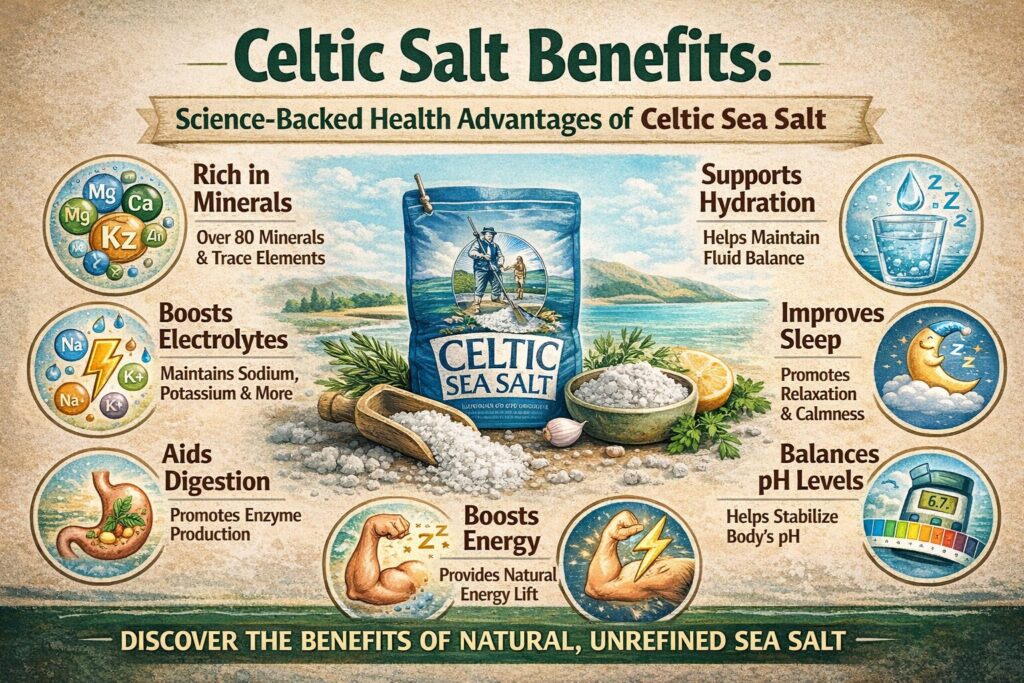
Although present in small amounts, these minerals contribute to the broader Celtic salt health benefits when used appropriately.
Top Celtic Salt Benefits Backed by Science
1. Supports Proper Hydration
One of the most discussed benefits of Celtic sea salt is its role in hydration.
Sodium is essential for:
- Regulating fluid balance
- Supporting nerve signaling
- Maintaining blood volume
When consumed in moderation, Celtic salt can help the body absorb and retain water more effectively than purified sodium chloride alone.
View More : Himalayan Salt and Lemon Water: Simple Recipe, Real 4 Benefits, and Safety Tips
2. Celtic Salt in Water Benefits for Electrolyte Balance
Adding a pinch of Celtic salt to water is a practice often used by athletes and wellness professionals.
Celtic salt in water benefits include:
- Supporting electrolyte replenishment
- Reducing muscle cramps
- Enhancing cellular hydration
This is particularly useful during:
- Intense physical activity
- Hot weather
- Fasting or detox protocols
3. Promotes Digestive Function
Adequate salt intake plays a role in digestion by supporting the production of hydrochloric acid (HCl) in the stomach.
Potential benefits of Celtic salt for digestion:
- Improved nutrient absorption
- Better breakdown of food
- Support for enzyme activity
Unlike refined salt, Celtic salt retains natural minerals that may further assist digestive processes.
4. Contributes to Mineral Intake
While Celtic salt should not be considered a primary mineral supplement, it can contribute small amounts of essential trace elements.
Celtic salt health benefits include:
- Supporting bone health (calcium, magnesium)
- Assisting muscle function (potassium)
- Contributing to metabolic processes (trace minerals)
This makes it a more nutrient-dense option compared to heavily refined salts.
5. Helps Maintain Acid-Alkaline Balance
Some research suggests that mineral-rich salts may support the body’s natural acid-alkaline balance when consumed as part of a whole-food diet.
While salt itself is not alkaline, the trace minerals in Celtic salt may help buffer excess acidity.
Is Celtic Salt Healthier Than Himalayan Salt?
Both salts are unrefined and mineral-rich, but they differ in origin and mineral composition.
Celtic Sea Salt:
- Harvested from seawater
- Higher moisture content
- Slightly higher magnesium
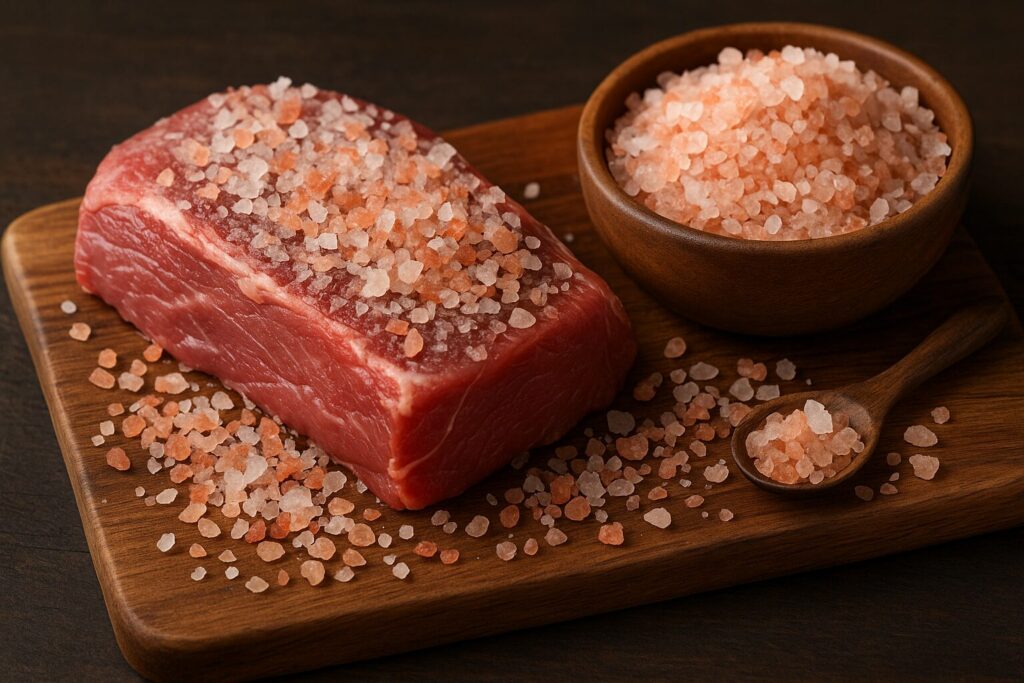
Himalayan Salt:
- Mined from ancient salt deposits
- Pink color due to iron
- Dry texture
Both offer health advantages when used correctly. Choosing between them often comes down to taste, texture, and dietary preference.
Natural mineral salts collection
How to Use Celtic Sea Salt Safely
Recommended Daily Intake
Health authorities recommend limiting total sodium intake to:
- ~2,300 mg/day for adults
- Less for individuals with specific health conditions
Even with Celtic sea salt benefits, moderation is essential.
Best Ways to Use Celtic Salt
- Cooking whole foods
- Seasoning vegetables and proteins
- Adding a pinch to water (occasionally)
- Homemade electrolyte drinks
Avoid excessive consumption, especially if you have hypertension or kidney concerns.
Common Myths About Celtic Salt
“Celtic salt contains all the minerals you need”
It contains trace minerals, not full daily requirements.
“You can consume unlimited Celtic salt safely”
Excess sodium regardless of source can be harmful.
“Celtic salt detoxes the body”
The liver and kidneys handle detoxification, not salt alone.
Scientific Perspective on Celtic Salt Health Benefits
From a scientific standpoint, Celtic salt:
- Is nutritionally superior to refined salt
- Provides trace minerals
- Supports hydration and electrolyte balance
However, it should complement not replace a balanced, nutrient-dense diet.
Conclusion: Are Celtic Salt Benefits Worth Considering?
When used responsibly, Celtic salt benefits extend beyond basic seasoning. Its mineral content, minimal processing, and traditional harvesting methods make it a superior alternative to refined salt.